How Often Should You Replace Your Shower Filter?
Shower filters do their work quietly, so it is easy to forget about them. Here is a simple guide to how often to swap your cartridge and how to tell when it is due.
The general guide
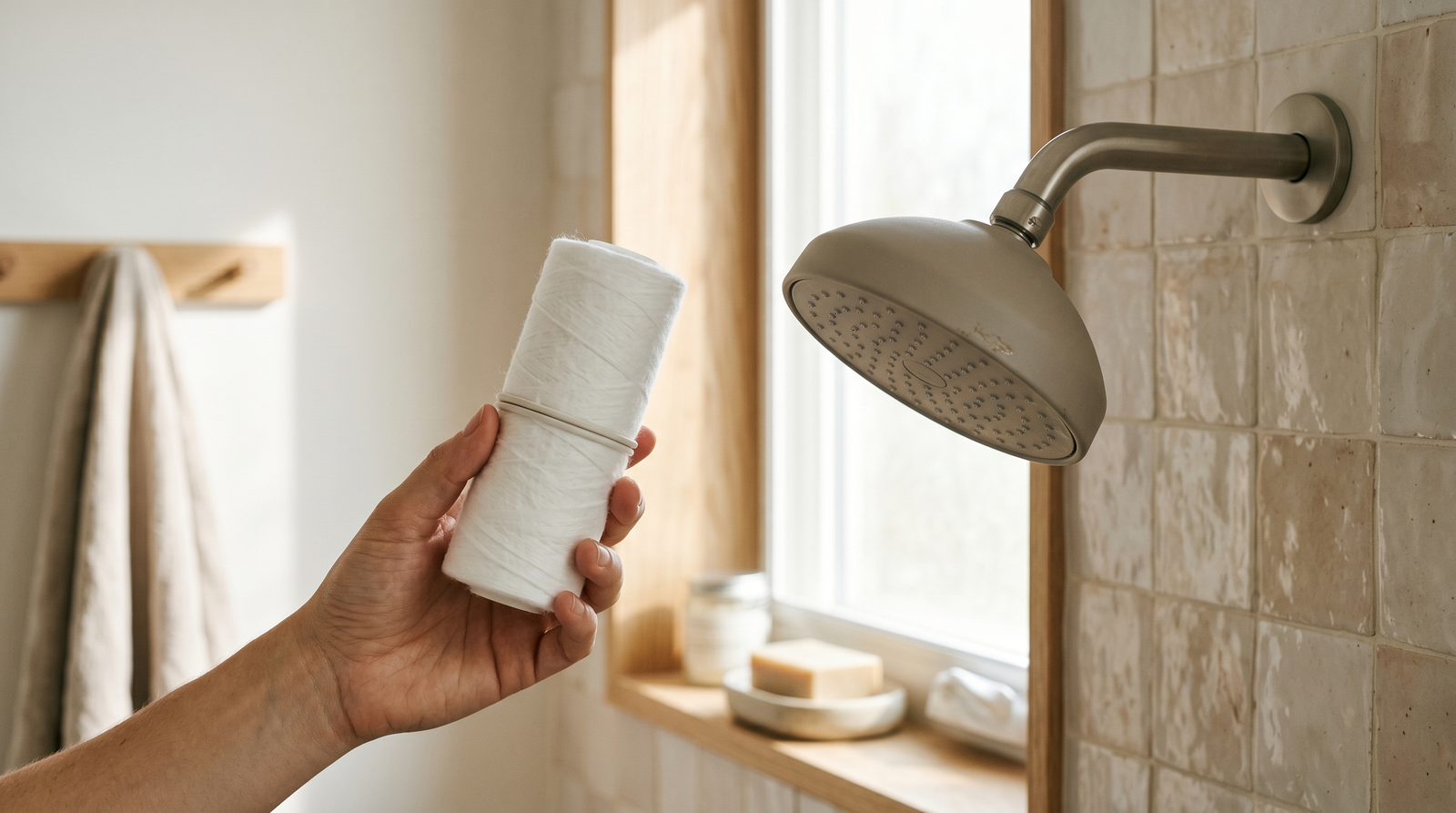
As a rough rule, an Ion Drop PP-cotton cartridge is easy to swap every 30 to 60 days. How long yours lasts depends on two things: how much you shower, and how much sediment and chlorine your local water carries. A busy household will get through cartridges faster than one person showering once a day.
How to tell it is time
- The cotton changes colour. A fresh cartridge is white. As it traps sediment and rust it discolours, when it looks noticeably grey or brown, swap it.
- The water feels different. If your rinse stops feeling as soft or fresh as it did, a new cartridge usually brings it back.
- It has been a couple of months. If in doubt, a simple calendar reminder keeps things easy.
Make it easy on yourself
The simplest approach is to keep spares on hand so swapping takes seconds. Ablu's replacement filters come in a 20-pack. At a cartridge every 30 to 60 days that is roughly a year and a half to three years for one shower head, so it is a box you buy rarely rather than a running cost you think about. Keep them in the bathroom cabinet and change the cartridge whenever the cotton looks discoloured.
A quick how-to
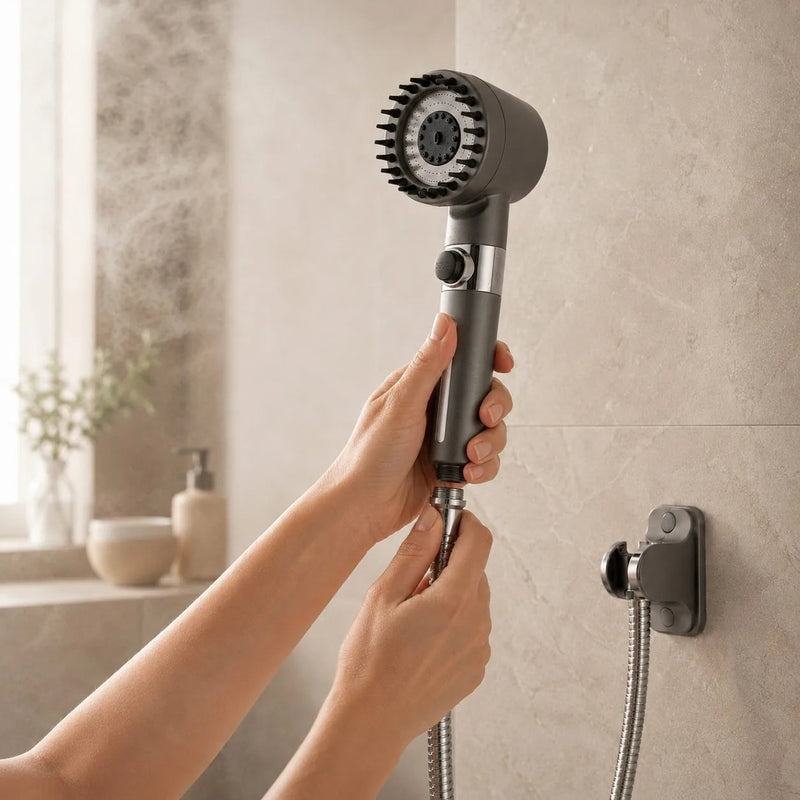
Swapping takes no tools: unscrew the filter housing on your Ion Drop shower head, lift out the old cartridge, drop in a fresh one, and screw it back together. That is it, back to a softer, fresher-feeling rinse.
What makes a cartridge run out faster
Two showers a day will get through cartridges faster than one, and long showers faster than short ones. Beyond that, it is mostly about what your water is carrying. Older galvanised or steel pipework sheds fine rust, and any work on the mains nearby stirs up sediment that has been sitting in the network for years. If you have ever turned a tap on after a water main was repaired and seen the water run cloudy, that is the sort of load that discolours a cartridge quickly.
None of that means anything is wrong with your water. Sediment is a normal part of a distribution network, and the cartridge trapping it is the cartridge working.
Can you rinse one out and reuse it?
Not usefully. Rinsing shifts whatever is sitting on the surface, but PP-cotton is a depth filter, so the fine particles it has caught are held through the thickness of the cotton rather than on the outside. A rinsed cartridge looks better than it performs. They are inexpensive enough that swapping is the simpler answer.
What happens if you leave it too long
Nothing dramatic. A loaded cartridge gradually restricts flow, so the first thing most people notice is that the spray feels weaker than it used to. It also stops doing much about chlorine taste and odour once it is saturated. If your shower has quietly got worse over a few months and you cannot think why, the cartridge is the first thing to check.
The inline Vitamin C filter runs on a different clock
If you use the inline Vitamin C filter instead of, or as well as, the in-head cartridge, do not wait for it to change colour. It works by being consumed as the water passes through rather than by clogging up, so the visual cue that works for cotton does not apply. We do not publish a service life for it, because how fast it is used up depends entirely on how much you shower. Replace it when the water stops feeling and smelling different to unfiltered water. The difference between the two filter types is worth a read if you are choosing between them. So is how to choose a shower filter in New Zealand, which sets the refill cost out in full.

From the range
Ion Drop Filtered Shower Head
A filtered shower head that gives you a stronger, fresher-feeling rinse - with a replaceable PP-cotton filter that helps reduce chlorine taste and odour and fine...
Shop the Ion Drop · $74.99