Shower Filters in New Zealand: How to Choose One
If your hair feels dry or looks dull after a shower, or your skin feels tight once you step out, the water itself might be part of the story. Across New Zealand, the US and Canada, tap water is treated with chlorine to keep it safe to drink, and many areas also have hard water that is high in dissolved minerals. Neither is a problem to shower in, but both can change how your hair and skin look and feel.
This is a guide to choosing a shower filter, written by a New Zealand shop that sells two of them. It covers what they honestly change, what they do not, how the two common types differ, and what the refills actually cost. It is a guide to our own range rather than a survey of every brand on the market, and it is written so you can tell the difference.
Why chlorine is in your shower water
Chlorine is added to public drinking water as a disinfectant. In New Zealand, residual disinfection is required for public supplies under the Water Services Act 2021, as the regulator Taumata Arowai explains. It does an important job on the way to your tap. Once it reaches your shower, that same chlorine can leave hair feeling drier and looking duller, and can make skin feel tight or stripped after a hot wash.
Hard water, briefly
Hard water simply means water with more dissolved calcium and magnesium (the science is here). It is common in parts of New Zealand and can leave a faint mineral film that makes hair look flat and skin feel less soft. Being honest: most handheld shower filters, including ours, target chlorine and sediment rather than removing hardness minerals. A filter can change how stripped your skin feels and how shiny your hair looks, but it is not a water softener.
Are shower filters worth it?
It depends on what you are expecting, so here is the split.
What you can reasonably expect. A reduction in chlorine taste and odour, and in the fine sediment and rust that come down older pipes. Most people describe the result as a gentler, fresher rinse: skin that feels softer rather than tight, hair that looks smoother and shinier over a few weeks. These are cosmetic, feel-good differences.
What you should not expect. It will not soften hard water, it is not a drinking-water filter, and it is not a treatment for any skin or scalp condition. If a shower filter is sold to you as any of those three things, that is the point to walk away.
The running cost, which is the part most guides skip. On the Ion Drop head, a twenty-pack of PP-cotton cartridges is $27.99 and you swap one every 30 to 60 days. That is somewhere between twenty months and a bit over three years of filters, so under $1.50 a month at the fastest sensible swap rate. Check that before you buy any filter: a cheap head with expensive proprietary cartridges costs far more over two years than a dearer one with cheap refills.
The two types, compared
Both of ours reduce chlorine taste, odour and sediment. They differ in where they sit and how you keep them going.
| Ion Drop Filtered Shower Head | Vitamin C Shower Filter | |
|---|---|---|
| What it is | A replacement handheld head with the filter built into it | An inline filter that screws in between your hose and the head you already own |
| Keep your current head? | No, it replaces it | Yes |
| Filter media | Multi-layer PP-cotton cartridge | Vitamin C (ascorbic acid) with mineral media, lightly scented |
| Refills | Twenty-pack of cartridges, $27.99, swap every 30 to 60 days | Replace the whole unit when it is spent |
| Price | $74.99 | $34.99 |
| Best if | You are happy to change the head, and want the lowest running cost | You like your current shower head, or you are renting |
The one combination to avoid is buying the cotton twenty-pack expecting it to fit the Vitamin C filter. They are different cartridges and they are not interchangeable.
What to check before you buy any of them
- Fit. A standard G1/2 inch thread screws onto your existing hose or arm, the same nominal half-inch fitting used across New Zealand, the US and Canada. Almost every domestic shower here uses it.
- Filter media. Quality filters use a multi-layer cotton cartridge, or a mix such as KDF and activated carbon, to reduce chlorine and sediment.
- Refill cost and availability. Work out the two-year cost, not the sticker price, and check the cartridges are not locked behind a subscription.
- Pressure. A well-designed head holds a strong, even flow while it filters. This matters more here than most places: a gravity-fed cylinder can sit near 30 kPa against roughly 200 kPa on mains.
- Where it ships from, and how long that takes. Ask before you order rather than after.
Where Ablu fits
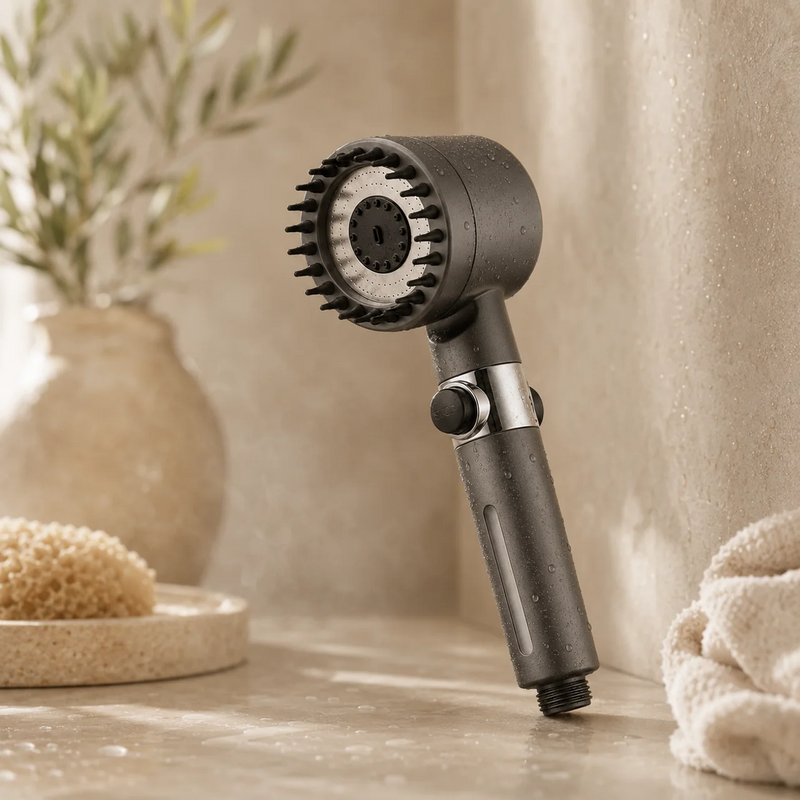
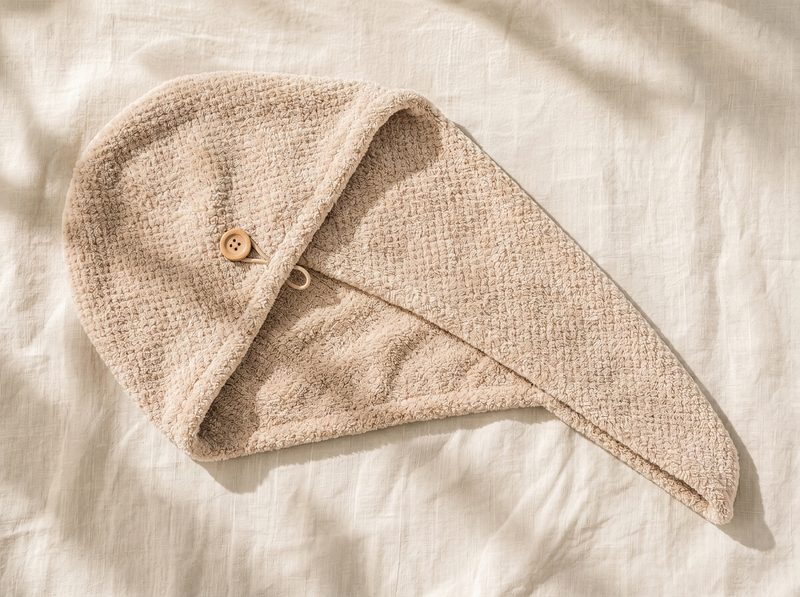
Our Ion Drop filtered shower head ($74.99) is a standard-fit handheld head that reduces chlorine taste, odour and sediment for a softer-feeling rinse, with twenty-packs of replacement cartridges at $27.99 and no subscription. If you would rather keep the head you have, the Vitamin C shower filter ($34.99) screws inline in about a minute. The Complete Ritual Kit ($124.99) brings the head, scalp brush, hair towel and refills together.
On shipping, plainly: Ablu is run from New Zealand but the products are dispatched by our supply partners in China. Orders leave in 1 to 3 business days and most New Zealand orders arrive in 5 to 10 days, with the US and Canada in 9 to 13 days. Shipping is free on every order with no minimum, and every order is tracked.
Both are listed on the shower filters page, with current prices.
Ablu makes cosmetic claims only. A filtered shower head is a feel-good upgrade for the look and feel of your hair and skin, not a treatment for any medical condition.

From the range
Ion Drop Filtered Shower Head
A filtered shower head that gives you a stronger, fresher-feeling rinse - with a replaceable PP-cotton filter that helps reduce chlorine taste and odour and fine...
Shop the Ion Drop · $74.99