Hair Plopping: How to Do It With a Microfibre Towel
Plopping is a way of drying curly or wavy hair without heat, by cradling the damp lengths on top of your head in a soft towel instead of rubbing them dry. It keeps curl clumps together while the water comes out, so hair dries with more definition and less frizz. It takes about twenty minutes and needs nothing but a towel.
Why a microfibre towel and not a bath towel
A terry bath towel is built from thousands of little looped hooks. Those loops are excellent at scrubbing a wet back and terrible at handling wet hair: they catch the cuticle, drag it open and pull curl clumps apart. That roughed-up surface is a big part of what frizz is.
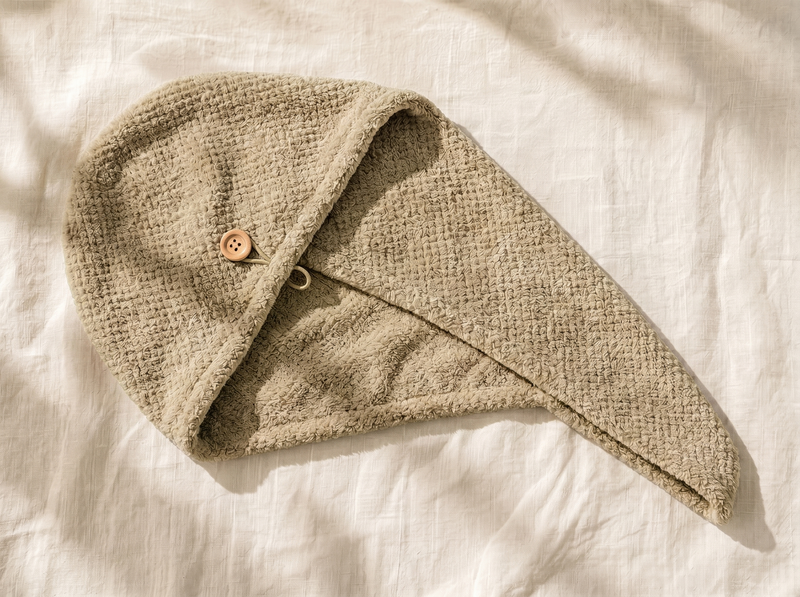
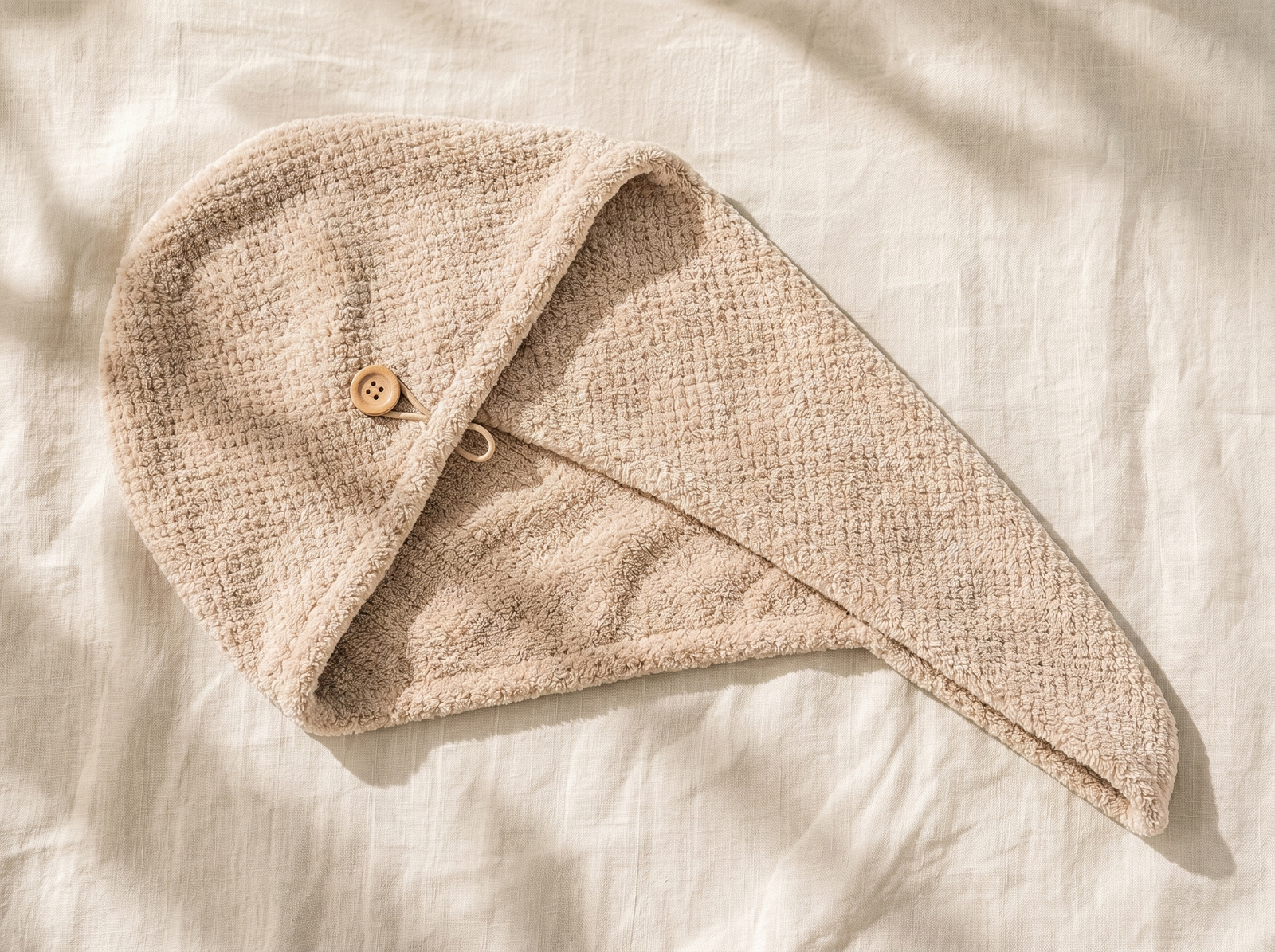
Microfibre is a much finer, flatter weave. It lifts water out by absorption rather than friction, so the hair keeps the shape it dried in. That is the whole reason plopping tutorials call for a microfibre hair towel, an old cotton T-shirt or a pillowcase rather than the towel already on the rail. A dedicated microfibre hair towel wrap just makes it easier to secure, because it twists and buttons instead of needing to be knotted.
What you need
- Freshly washed, soaking-wet hair, still dripping.
- Your usual leave-in conditioner, curl cream or gel.
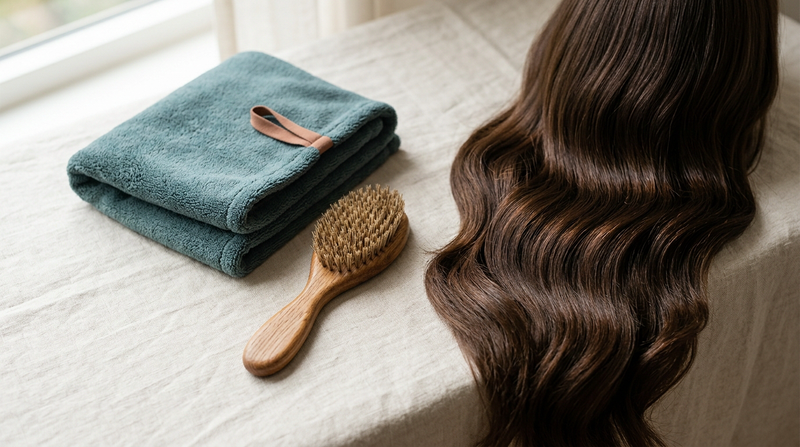
- A microfibre hair towel, or a smooth cotton T-shirt.
How to plop your hair, step by step
- Start soaking wet. Do not towel-dry first. Plopping works on hair that is still heavy with water, because the water is what holds the clumps together while they set.
- Apply product upside down. Flip your head forward and rake or scrunch your leave-in and styler through the lengths while hair is still dripping.
- Lay the towel out. Spread the wrap flat on a bench, a closed toilet lid or the edge of the bed, with the tapered end nearest you.
- Lower your hair into it. Bend forward from the waist and let your hair fall straight down into the middle of the towel, so the lengths pile up on top of your head in concertina folds rather than hanging out flat. This piling is the actual technique, and it is what encourages curls to spring up rather than drop.
- Wrap and secure. Bring the tapered end up over the back of your neck, twist it along its length, and loop it through the button at the front. You should be upright with a light turban on, nothing pulling.
- Leave it, then let it down gently. Unbutton, tip forward and let the hair fall out of the wrap rather than shaking it out.
How long to leave it on
Fifteen to twenty minutes suits most people. Long enough to get dressed and make coffee, short enough that hair is still damp when it comes down, which is what you want if you are going to diffuse or air-dry from there.
Much beyond thirty minutes and two things start to work against you. Hair compressed in one position for a long time can set with a flat patch at the crown, and hair that stays damp and bundled for hours simply takes longer to dry. Overnight plopping is popular online, but it is the version most likely to give you a dent, so try a short plop first and see how your hair behaves.
Who it suits, and who it does not
Plopping is aimed at curly, coily and wavy hair, where the goal is to keep a pattern that already exists. If your hair is straight, plopping will not create curl. It is still a gentler way to get water out than rubbing, so the towel is worth using either way, but do not expect wave from it.
Fine wavy hair sometimes comes out flatter rather than bouncier, because the weight of piled wet hair presses the roots down. If that happens, try a shorter plop, or clip the roots for volume once the towel comes off.
Common mistakes
- Towel-drying first. Squeezing or rubbing before you plop undoes the point of it. Go in dripping.
- Using a terry towel anyway. The friction is the problem, so a rough towel will frizz hair even in a plop.
- Shaking it out. Disturbing the clumps at the end reintroduces the frizz you just avoided. Let it drop.
- Leaving it on for hours. More time is not more definition, it is just more chance of a flat crown.
Being straight about what this does
Plopping is a drying technique, not a treatment. It changes how your hair dries on the day, so it can look more defined and less frizzy, and it spares your hair the friction of a rough towel. It does not change your hair's structure, repair damage, make hair grow, or permanently alter your curl pattern. If your hair is frizzy mainly because it is dry, the drying method helps at the margins, but conditioning is doing the heavier lifting.
Where it fits
Wash, condition, apply your leave-in, plop for twenty minutes, then air-dry or diffuse. If frizz is your main complaint it is worth reading why hair goes frizzy and how to calm it, and if you are weighing up the towel itself, microfibre versus a regular towel covers the difference. For the plain turban method rather than plopping, see how to use a hair towel wrap.
Our Microfibre Hair Towel Wrap is made for exactly this: a fine microfibre weave that lifts water without roughing up the cuticle, and a twist-and-button turban that stays put while you get on with your morning. Free shipping on every order.

From the range
Anti-Frizz Detangling Brush
A quiet upgrade to the part of wash day everyone dreads. This flexible detangling brush glides through wet or dry hair, easing knots without the tug.Detangles...
Shop the Ion Drop · $27.99