Chlorine in Your Hair After Swimming: The Post-Pool Rinse
Pool water is a far heavier chlorine exposure than anything coming out of your shower, and hair tells you so immediately: rough, squeaky, tangled, and looking dull by the time it dries. Most of what helps happens in the first ten minutes.
How much chlorine is actually in pool water?
More than tap water, and the gap is bigger than most people assume. Milligrams per litre and parts per million are the same thing at these concentrations, so the figures below compare directly.
| Water | Free chlorine | Source |
|---|---|---|
| Most disinfected drinking water | 0.2 to 1 mg/L | World Health Organization |
| US legal ceiling for tap water | 4.0 mg/L | US EPA maximum residual disinfectant level |
| Swimming pool, minimum | at least 1 ppm, or 2 ppm with a stabiliser | US CDC |
| Hot tub, minimum | at least 3 ppm | US CDC |
Read the table the right way round. Those pool figures are minimums a pool is supposed to hold all day, and many run above them. The drinking-water figure is what is typically there. So a well-run pool starts at the top of the normal drinking-water range and a hot tub starts several times above it, sustained, for as long as you are in it.
Sources, so you can check them rather than take our word for it: WHO, Chlorine in Drinking-water (WHO/SDE/WSH/03.04/45), which states that "chlorine is present in most disinfected drinking-water at concentrations of 0.2-1 mg/litre"; US EPA National Primary Drinking Water Regulations; and CDC Healthy Swimming, which recommends "pH 7.0-7.8 and a chlorine concentration of at least 1 ppm in pools and at least 3 ppm in hot tubs".
Before you get in
Wet your hair with fresh water first. Hair absorbs a certain amount of whatever it meets first, so hair already full of clean water takes up less pool water. It costs thirty seconds and it is the single most useful habit here.
If you swim often, a cap over pre-wetted hair does more than a cap alone.
The first ten minutes after
- Rinse promptly and thoroughly, before hair dries. Chlorinated water drying in the hair is what leaves the strongest smell and the roughest feel.
- Shampoo properly, once. A scalp brush helps get shampoo through to the scalp rather than skating over the top of wet, tangled hair.
- Condition while it is still wet, mid-lengths and ends.
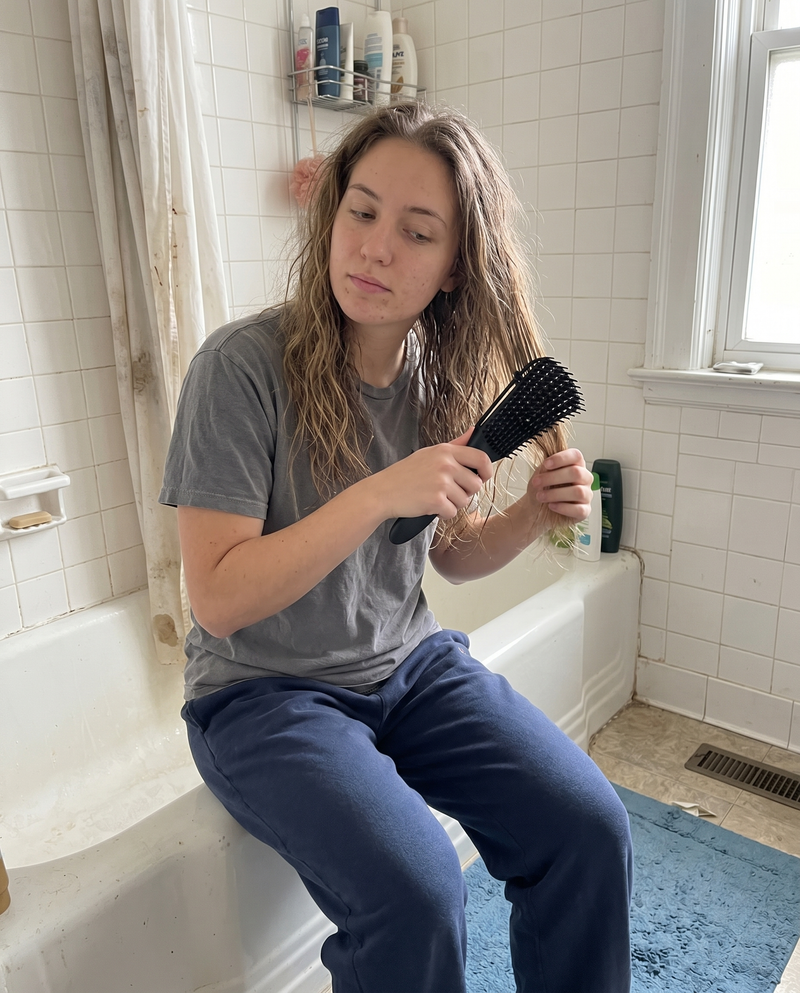
- Detangle gently, from the ends up. Wet hair is at its most fragile and this is where most swimmers do the real damage, not in the pool. Use a flexible detangling brush and work upward.
- Wrap, do not rub. A microfibre wrap absorbs without the friction.
The green tint is copper, not chlorine
This one is worth getting right, because almost everyone blames the wrong thing. Chlorine does not dye hair green. Copper does.
Pool water picks up dissolved copper from two places: copper sulfate, widely used as an algaecide, and copper plumbing. Chlorine, being an oxidiser, converts that copper into compounds that bind readily to the keratin in hair. They sit on the cuticle, and in more porous hair they get further in. That is the green.
Which is also why blondes and anyone with colour-treated hair see it first. Lightening and colouring lift the cuticle, so the strand is more porous and holds on to more copper. It is not that fair hair attracts copper; it is that fair hair has usually been processed, and processed hair is more absorbent. Untreated dark hair picks up the same copper and you simply cannot see it.
Chlorine still does its own damage, separately. It is an oxidising agent and it does not distinguish between algae and the protective outer layer of your hair. Once that layer is roughened, hair loses water faster and reflects light less evenly, which is the dull, straw-like look after a long swim.
If you swim regularly
A weekly conditioning mask does more for how hair looks over a summer of swimming than anything you apply on the day. Ten minutes, once a week, is the whole commitment. There is a longer walkthrough in how to use a hair mask.
Worth saying plainly: nothing here removes chlorine from hair that has already dried in it, and no rinse undoes an afternoon in the pool. What a good post-swim routine does is stop you adding avoidable roughness on top.
And the shower itself
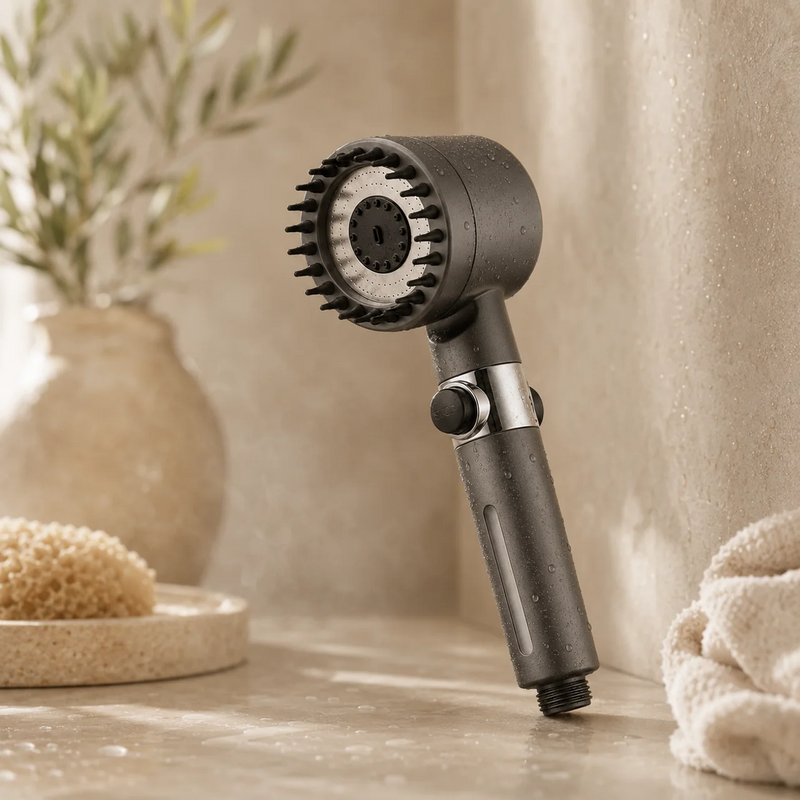
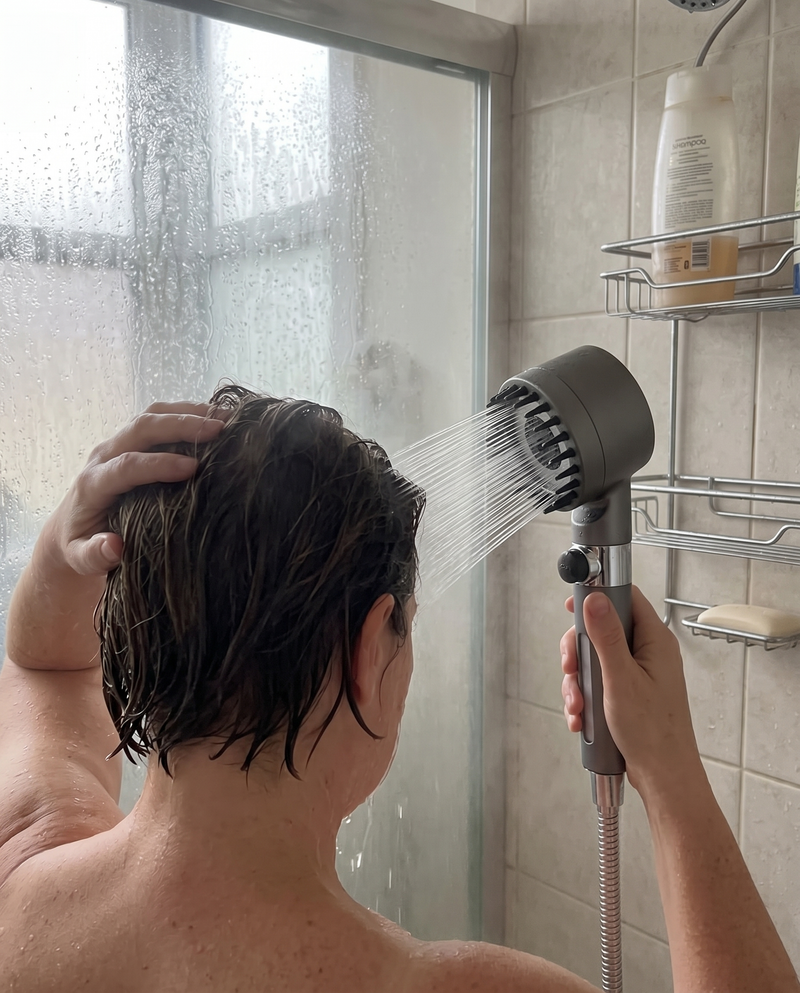
Your post-pool rinse is a shower, so the same water quality applies. New Zealand public supplies are chlorinated by law, and most large supplies in the United States and Canada are disinfected too, at far lower levels than a pool. Worth knowing if you are reading this from overseas: many North American utilities use chloramine rather than free chlorine, and chloramine is harder to reduce than chlorine is, so a shower filter does less for it. If the everyday feel of it bothers you, a filtered shower head reduces the chlorine taste and odour and fine sediment in the rinse. It does not soften hard water, it is not a drinking-water filter, and it is not a treatment for hair or scalp.
The shower filters Ablu stocks are listed here, with what each one does and what it does not.

From the range
Ion Drop Filtered Shower Head
A filtered shower head that gives you a stronger, fresher-feeling rinse - with a replaceable PP-cotton filter that helps reduce chlorine taste and odour and fine...
Shop the Ion Drop · $74.99