Is Your Town Water Chlorinated? How to Check, in New Zealand
There is a public register that tells you, town by town, how your drinking water is treated and whether your supplier holds a residual-disinfection exemption. Most people never look at it, and most of what gets repeated about which New Zealand towns are unchlorinated is out of date. This is how to check your own supply, and what the register does and does not tell you.
The rule
Under the Water Services Act 2021, networked drinking-water suppliers are required to maintain a residual disinfectant, usually chlorine or chloramine, all the way through the network to your tap. The regulator, Taumata Arowai, oversees this.
The residual is not there to treat the water at the plant, that has already happened. It is there to keep the water safe on the journey through kilometres of pipe between the treatment plant and your house, where a crack or a pressure drop can let contamination in. A faint chlorine smell is the system working, not failing.
The exception everyone brings up
Christchurch is the interesting case. The city draws from aquifer water of unusually high quality and has pushed hard for an exemption from the residual requirement. The regulator declined it in November 2023, and as at 2026 the city is still chlorinating. The concern was never the source water. It was the opportunities for contamination in the distribution network on the way to the tap, so the council is working on leaks, backflow prevention and emergency response rather than on the aquifer.
We are dating that deliberately, because it is a live issue and it may change. If it matters to you, check rather than trusting an article, including this one.
What the exemption register actually shows
The rule has an escape hatch. Sections 57 and 58 of the Water Services Act let a supplier apply to be exempted from the residual disinfection requirement. So the honest way to answer "is my town chlorinated" is not to guess town by town. It is to ask how many suppliers have actually been let off.
The answer, from the regulator's own published exemptions register, is one.
- Selwyn District Council, Rakaia Huts (RAK003). Residual disinfection exemption No. 002, expiring 1 February 2029. That is the entire national list.
- No class exemptions have been granted at all, so there is no category of supply that is off the hook as a group.
- Three general exemptions exist, held by the Torrent Bay Township Committee and the Department of Conservation. A general exemption is a different instrument under the Act and we have not checked what each one covers, so do not read them as permission to stop chlorinating.
Decision papers have also been published for applications from Christchurch City, Cust, Brooklands-Kainga and Wellington Region Bulk Water. Christchurch's was declined, as above. We are not characterising the others, because the regulator files them under a heading that mixes declined applications with published decisions generally, and we have not read each paper.
Those figures are from the register as it stood when it was last updated on 2 February 2026. It is a live document. If this matters to you, open it rather than trusting us.
Not chlorinated is not the same as exempt
This is the part that trips people up, and it cuts against the reassuring version of the story. A handful of supplies have no residual disinfectant not because they were granted an exemption, but because they have not met the requirement yet.
In the most recent list of its kind we could find, published on 28 November 2023, the regulator named 13 councils operating 30 supplies and two government departments operating 50 supplies that lacked a bacterial barrier, a residual disinfectant, or both. Forty-eight of those supplies had no residual disinfection, which the regulator said potentially affected 128,857 people. Those suppliers were expected to invest in treatment or apply for an exemption.
That list is from 2023 and things will have moved since, which is exactly why we are dating it rather than presenting it as today's position. The point that survives is the principle: an unchlorinated supply in New Zealand is far more likely to be one that is behind on the rules than one that has been cleared of them.
How to check your own supply
- Your council's water-quality page is the primary source. Most publish current treatment and testing information for each supply zone.
- Taumata Arowai maintains the register of drinking-water suppliers and their compliance.
- The regulator's public register of drinking water supplies lets you search your own supply directly. Note that some supplies are not required to register until 2028, so a gap in the register is not proof of anything.
- Private bore or rainwater tank? Then none of the above applies to you. You are your own supplier, disinfection is your call, and chlorine is unlikely to be what you are noticing in the shower.
What this has to do with your shower
Nothing about chlorination makes water unsafe to shower in. It is a comfort and feel question, not a health one. What people notice is a faint pool-like smell when hot water runs, skin that feels tight afterwards, or hair that feels rougher than they would like. Heat and steam make the smell more obvious, which is why the shower is where you notice it rather than the kitchen tap.
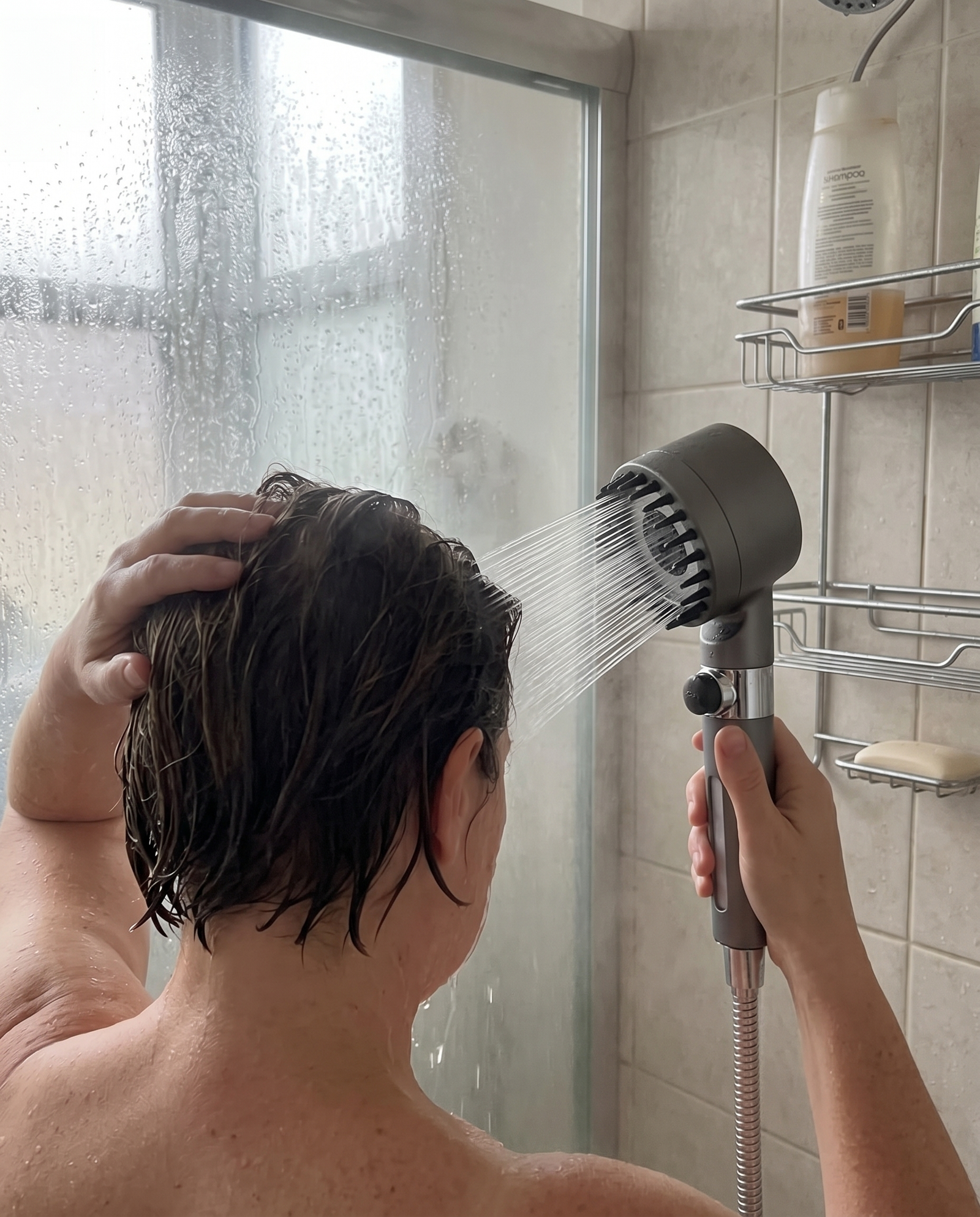
If that is what is bothering you, filtering the rinse is the straightforward response. A filtered shower head reduces the chlorine taste and odour and fine sediment as the water passes through. It will not soften hard water, it is not a drinking-water filter, and it is not a medical or therapeutic treatment.
If you decide to filter the rinse, Ablu's shower filters are listed here with prices and refill costs.

From the range
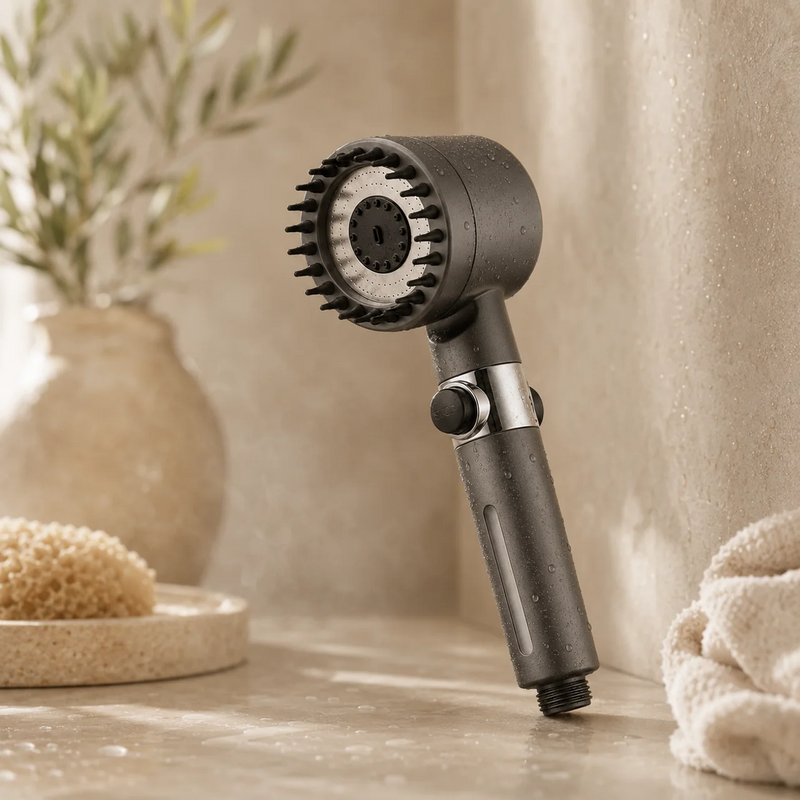
Ion Drop Filtered Shower Head
A filtered shower head that gives you a stronger, fresher-feeling rinse - with a replaceable PP-cotton filter that helps reduce chlorine taste and odour and fine...
Shop the Ion Drop · $74.99